
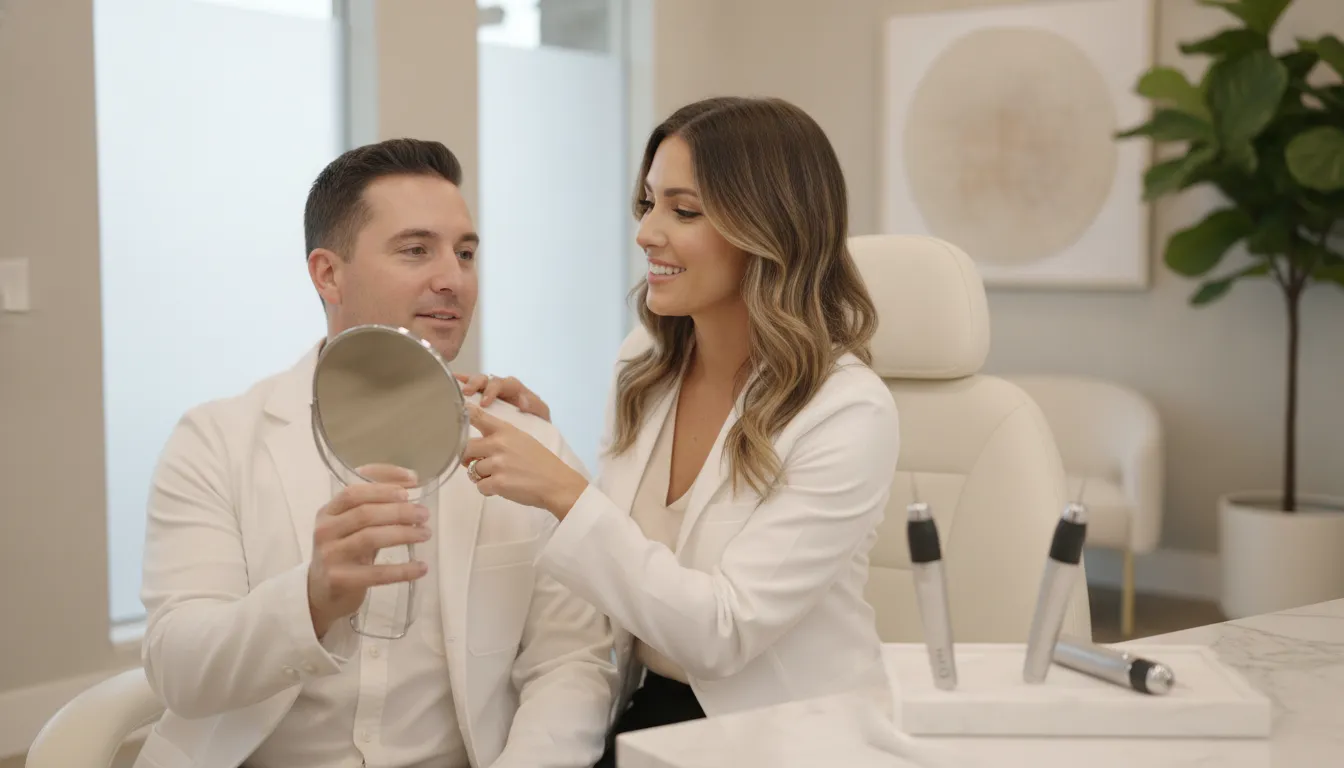
Choosing between traditional microneedling and radiofrequency microneedling is less about finding a universally better treatment. It is about matching the technology to your skin concerns, comfort level, recovery preferences, treatment goals, and medical history.
Schedule a personalized skin consultation at Soul Glow Medspa
SkinPen vs Morpheus8 comes down to mechanism: SkinPen uses controlled mechanical microneedling, while Morpheus8 combines microneedling with radiofrequency energy. That difference may influence the concerns addressed, the depth and energy used, and the expected recovery, but candidacy and results vary by patient.
Understanding how each approach works makes it easier to discuss realistic options with a licensed medical provider. The key distinction begins with what each technology delivers beneath the skin.
What Does SkinPen vs Morpheus8 Mean for Your Skin?
The clearest distinction in the SkinPen vs Morpheus8 comparison is the energy used. SkinPen is a powered microneedling device that uses fine needles to create controlled punctures in the skin. Morpheus8 is generally described as a radiofrequency (RF) microneedling device, combining needle penetration with RF energy delivered into and under the skin. The added energy changes the treatment mechanism, so these names should not be treated as interchangeable.
Schedule a personalized skin consultation with Soul Glow Medspa.
How does SkinPen work?
The FDA describes aesthetic microneedling as a procedure that mechanically punctures skin tissue with one or more needles. SkinPen Precision is identified in the FDA record as a powered microneedle device. Its FDA-authorized intended use includes improving the appearance of facial acne scars in adults age 22 and older. More broadly, legally authorized microneedling devices may have indications related to facial acne scars, facial wrinkles, or abdominal scars, depending on the specific device and labeling. These indications are not a promise that every patient will see the same result.
In practical terms, traditional microneedling focuses on controlled mechanical stimulation and the skin’s remodeling response. Needle depth, technique, skin condition, and treatment planning matter. The FDA notes that SkinPen safety and effectiveness have not been established at needle depths greater than 1.5 mm. Device settings should be determined by a qualified provider rather than copied from general online advice. You can learn more about Soul Glow’s microneedling service, which is described separately from any named device brand.
How is Morpheus8 different?
RF microneedling uses small electrodes, also called microneedles, to deliver radiofrequency energy into and under the skin and produce local heating, according to the FDA. That means Morpheus8 represents a device-specific RF approach, rather than mechanical microneedling alone. The goal, settings, depth, and suitability depend on the device and the provider’s assessment. The FDA classifies RF microneedling as a medical procedure and recommends care from a licensed provider trained and experienced with the device being used.
Soul Glow’s published information distinguishes traditional microneedling for texture improvement from RF microneedling for enhanced tightening. It does not confirm that SkinPen or Morpheus8 is offered at the practice. This comparison is educational, not a statement of device availability. A consultation can clarify which treatment category, if any, fits your skin, goals, and recovery expectations. Results may vary.
How Do SkinPen and Morpheus8 Compare Side by Side?
Both treatments use controlled needle penetration, but they are not interchangeable. SkinPen is a powered microneedling device that mechanically punctures the skin. Morpheus8 is an example of RF microneedling, a category in which microneedles deliver radiofrequency energy into and under the skin to create localized heating. The FDA describes these mechanisms, while marketing descriptions should not be treated as proof that either named device is available at a particular practice.
| Option | Best for | Energy |
|---|---|---|
| SkinPen | Texture and acne-scar appearance | Mechanical microneedling |
| Morpheus8 | Selected texture and firmness goals | RF microneedling |
This comparison describes general education, not a recommendation or confirmation of local availability. Soul Glow’s published information distinguishes traditional microneedling for texture improvement from RF microneedling for enhanced tightening, but it does not establish that SkinPen or Morpheus8 is offered there. A consultation should clarify which technology is actually available, why it fits the concern, and what alternatives may be more appropriate.
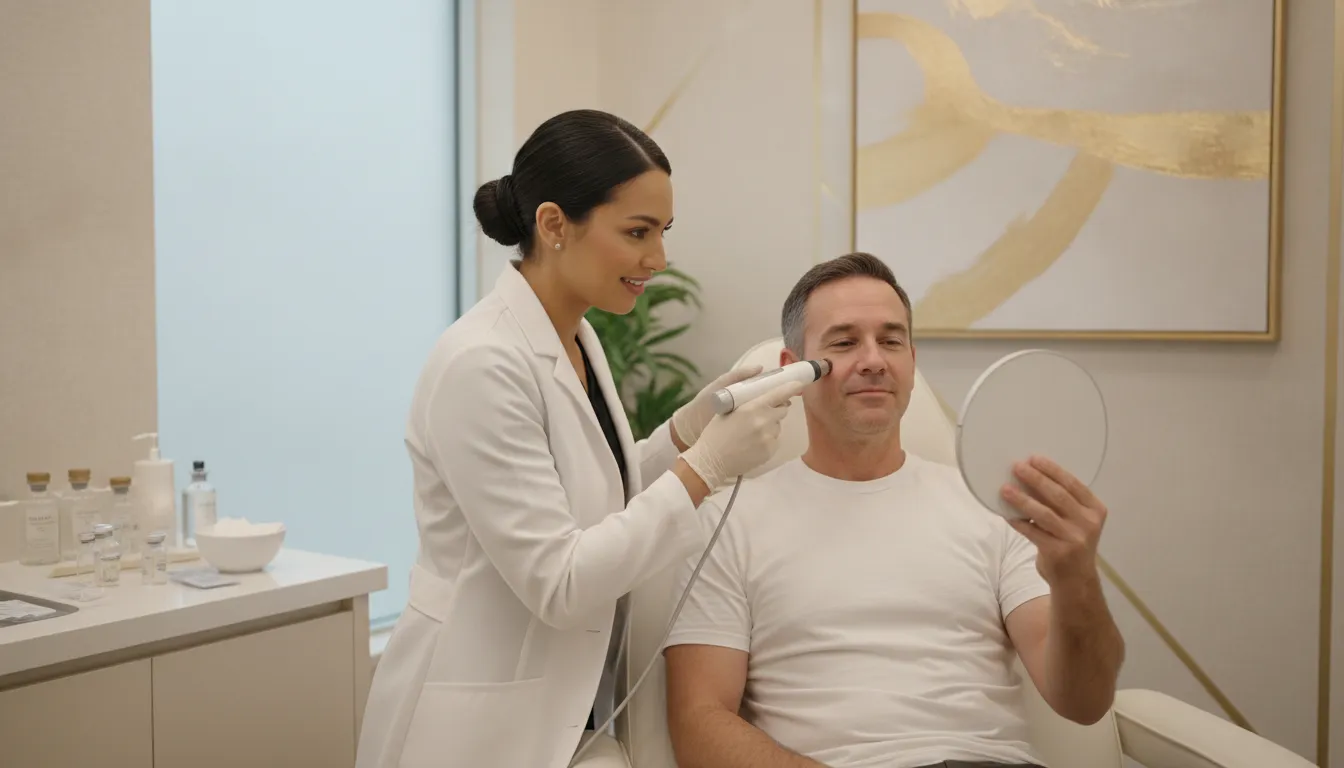
Safety deserves particular attention with RF microneedling. The FDA classifies it as a medical procedure, not an at-home cosmetic treatment, and recommends choosing a licensed provider with relevant training and experience.
- FDA reports on certain RF microneedling uses have included burns, scarring, fat loss, disfigurement, and nerve damage.
- Those warnings describe reported complications, not a prediction of what every patient will experience.
- Results may vary, so individualized assessment matters more than choosing the most heavily marketed device.
Ask which device will be used, who will perform the procedure, what risks apply to your skin and history, and how aftercare will be handled.
Which Skin Concerns Can Each Treatment Address?
Both traditional microneedling and RF microneedling can support skin renewal, but they are not interchangeable choices for every concern. The right approach depends on whether your priority is surface texture, scar appearance, fine lines, pore visibility, mild laxity, or a deeper remodeling goal.
Texture, pores, and early lines
Traditional microneedling is often considered when the main goal is smoother-looking skin. Controlled needle punctures create a healing response that can support collagen and elastin production. The FDA describes legally authorized microneedling devices as having indications that include improving the appearance of facial wrinkles. Soul Glow’s service information also identifies rough texture, enlarged pores, dull tone, sun damage, and early signs of aging as concerns patients commonly bring to a consultation. Learn more about Soul Glow’s microneedling service and how treatment planning may be tailored to your skin and goals.
Acne scars and uneven skin
Microneedling has meaningful evidence for improving the appearance of acne scars. A systematic review reported improvement in all 33 evaluated articles, while also noting that comparisons with combination therapy and fractional laser treatment were inconsistent. That finding supports realistic optimism, not a promise that one device will produce the same result for every scar type. Scar depth, skin condition, active breakouts, and prior treatments can all influence the recommendation.
Laxity and deeper remodeling goals
RF microneedling adds radiofrequency energy beneath the skin, where it creates localized heating. That added energy may be considered when mild laxity or a firmer-looking result is part of the goal, alongside texture improvement. It does not reproduce a surgical facelift or correct significant laxity. If tightening or deeper remodeling is not a priority, the added energy may be more treatment than necessary for a texture-focused plan. Review general RF microneedling treatment options without assuming that a named device such as Morpheus8 is offered by Soul Glow Medspa.
In practical terms, SkinPen may be discussed in the context of mechanical microneedling and acne-scar or texture goals. Morpheus8 represents an RF microneedling approach that may suit selected remodeling or mild laxity concerns. Neither is a universal winner. A licensed provider should evaluate your skin, priorities, and medical history before recommending a plan. Results may vary.
What Is Downtime Like After SkinPen or Morpheus8?
Recovery depends on the device, treatment settings, area treated, skin condition, and your individual response. A mechanical microneedling session may leave the skin temporarily red, tight, dry, rough, tender, or mildly uncomfortable. The FDA also lists itching, peeling, bruising, bleeding, burning, and crusting among possible risks of authorized microneedling uses. Most side effects occur shortly after treatment and resolve, but the FDA notes that some side effects can last longer or be permanent. Review the FDA’s microneedling safety information before making a decision.
What can you expect after traditional microneedling?
Soul Glow Medspa’s general microneedling information says redness and swelling usually subside within a few days, and numbing cream may be used to reduce discomfort. That is general guidance for the practice’s microneedling service, not a promise for every SkinPen patient. A sunburn-like sensation may occur during early recovery. Follow the written instructions from your treating provider instead of applying makeup, active skincare, exfoliants, or other products on a schedule copied from another treatment.
How might RF microneedling recovery differ?
Morpheus8 is generally described as RF microneedling. The FDA explains that RF microneedling devices use microneedles to deliver radiofrequency energy into and under the skin, producing local heating. Because it combines needle penetration with energy, recovery can be more variable than general mechanical microneedling guidance suggests. Reports in provider education materials include redness, swelling, tenderness, pinpoint marks, dryness, and light flaking. Redness may settle over 24 to 72 hours in some cases, while other effects can last longer. These are not universal timelines, and Soul Glow’s general microneedling downtime information should not be transferred to Morpheus8.
RF safety deserves careful attention. The FDA has received reports of serious complications with certain RF microneedling uses, including burns, scarring, fat loss, disfigurement, and nerve damage. RF microneedling is a medical procedure, not an at-home cosmetic treatment. Ask which device will be used, who will perform it, how aftercare will be handled, and whether the provider is licensed and trained with that device. Results may vary, so an individualized evaluation is more reliable than choosing by a promised recovery window.
Who Is a Good Candidate for SkinPen or Morpheus8?
Good candidacy starts with the concern you want to improve, not with choosing a device by name. A licensed provider should review your skin, medical history, current medications, healing history, and expectations before recommending traditional microneedling, RF microneedling, or another option. Soul Glow’s approach similarly emphasizes evaluating your skin and tailoring the plan to your skin type, goals, and downtime expectations. Learn more about personalized microneedling care.
Your concern and skin status matter
SkinPen is generally discussed in connection with controlled microneedling and the appearance of facial acne scars in adults age 22 and older, based on its FDA-described intended use. The FDA also notes that legally authorized microneedling devices may have indications involving facial wrinkles and abdominal scars in adults. These authorizations do not mean every patient is appropriate, or that every device is interchangeable.
RF microneedling, including education about devices such as Morpheus8, adds radiofrequency energy beneath the skin. That may be considered when a provider believes energy-assisted remodeling could suit the type and depth of scarring. Or when mild loss of firmness is part of the concern. It is not a substitute for surgery when laxity is significant. If texture is the primary goal and deeper remodeling or tightening is not needed, additional energy may not be the most appropriate choice.
Medical review and provider training are essential
Active skin problems, a tendency toward abnormal healing, a history of cold sores, pigment concerns, or other medical factors may change the recommendation. Do not assume that a treatment is safe because it is minimally invasive. The FDA advises patients to use FDA-authorized microneedling devices and to discuss benefits and risks with a healthcare provider. For RF microneedling, it specifically recommends a licensed provider with training and experience using the planned device, and advises patients to ask which device will be used. RF microneedling is a medical procedure, not an at-home cosmetic treatment.
A consultation should also clarify the treatment’s purpose, expected recovery, alternatives, and what improvement is realistic. Treatment parameters can vary, so the same named device is not necessarily used in the same way for every person. Results may vary, and a thoughtful plan may recommend a different service, staged treatment, or no treatment until the skin is ready. Soul Glow’s published information distinguishes traditional microneedling from RF microneedling but does not confirm that SkinPen or Morpheus8 is offered at the practice.
How Can SkinPen vs Morpheus8 Guide Your Choice?
Choosing between SkinPen and Morpheus8 starts with your primary concern, not the device name. If your priority is improving surface texture, acne-scar appearance, or uneven tone, traditional microneedling may be a reasonable direction to discuss. If laxity and deeper remodeling are central concerns, a provider may discuss an RF microneedling approach, which combines needle delivery with radiofrequency energy. The FDA explains that RF microneedling devices deliver energy into and under the skin to produce local heating, so treatment planning requires appropriate medical training and judgment.
Next, consider recovery in the context of your schedule. Traditional microneedling and RF microneedling are not interchangeable, and recovery can vary with the device, settings, treatment area, and your skin. Do not assume that another patient’s timeline will apply to you. Ask what visible redness, swelling, tenderness, and aftercare may be realistic before committing to a date.
Your desired type of remodeling matters as well. The FDA describes authorized microneedling devices for certain indications, including the appearance of facial acne scars and wrinkles. Research supports improvement in acne-scar appearance after microneedling, while also noting that comparisons with other minimally invasive treatments need more study. That means a confident recommendation should be based on your skin, goals, and risk discussion, not on a universal claim that one option is more effective.
Provider experience and actual device availability are practical deciding factors. Ask which specific device would be used and whether it is FDA-authorized for the proposed use. Ask who will perform the procedure and how the plan will be adjusted for your medical history and skin status. The FDA recommends choosing a licensed provider trained and experienced with RF microneedling. Soul Glow Medspa does not confirm that it offers SkinPen or Morpheus8. Its information distinguishes traditional microneedling from RF microneedling for enhanced tightening. Listed options include Soul Glow skin treatment options, Matrix RF skin tightening and sublative renewal, and Secret RF microneedling treatment options. These should not be represented as SkinPen or Morpheus8.
A local consultation can help translate the comparison into a safe, individualized plan. Your provider can assess whether your concern is primarily textural, pigment-related, or associated with laxity, review recovery expectations, and explain alternatives.
Whichever path you consider, ask for realistic expectations and clear aftercare instructions. Results may vary, and the most appropriate treatment is the one that fits your goals, candidacy, provider expertise, and comfort with recovery.
Plan Your Next Skin Treatment With Confidence
A comparison can help you understand the technology, but the right recommendation depends on your skin, goals, medical history, and the services available from a qualified provider. Soul Glow Medspa serves Farmers Branch and the North Dallas area with personalized skin treatment planning. Discuss whether traditional microneedling, RF microneedling, or another approach fits your goals during a personalized evaluation. Results may vary.
Contact Soul Glow Medspa to schedule a personalized skin consultation
Frequently Asked Questions
Should I choose microneedling or Morpheus8?
That depends on your primary concern, desired treatment approach, and tolerance for recovery. Traditional microneedling mechanically creates controlled microchannels, while RF microneedling adds radiofrequency energy beneath the skin. A licensed provider can assess your skin, medical history, and goals before recommending an appropriate option. Results may vary.
How much does one session of SkinPen cost?
Pricing varies by provider, treatment area, clinician, and whether the plan includes an additional service. Soul Glow Medspa has not supplied a universal SkinPen price for this comparison, and its published service information does not confirm that SkinPen is available at the practice. Request current details directly rather than relying on general online estimates.
Is 40 too old for microneedling?
No. Age alone does not determine candidacy. The more useful questions involve your skin condition, treatment goals, medical history, active skin concerns, and realistic expectations. FDA-authorized microneedling devices have indications that include improving the appearance of facial acne scars and wrinkles in adults age 22 and older. The FDA outlines these indications and risks.
What may be more effective than Morpheus8?
There is no single treatment that is more effective for every person or concern. The best option may be traditional microneedling, RF microneedling, laser treatment, or another approach based on the desired outcome and clinical assessment. Research comparing microneedling with other minimally invasive treatments remains limited and inconsistent, so discuss benefits, risks, and alternatives with a qualified provider. A systematic review summarizes the available acne-scar evidence.
