
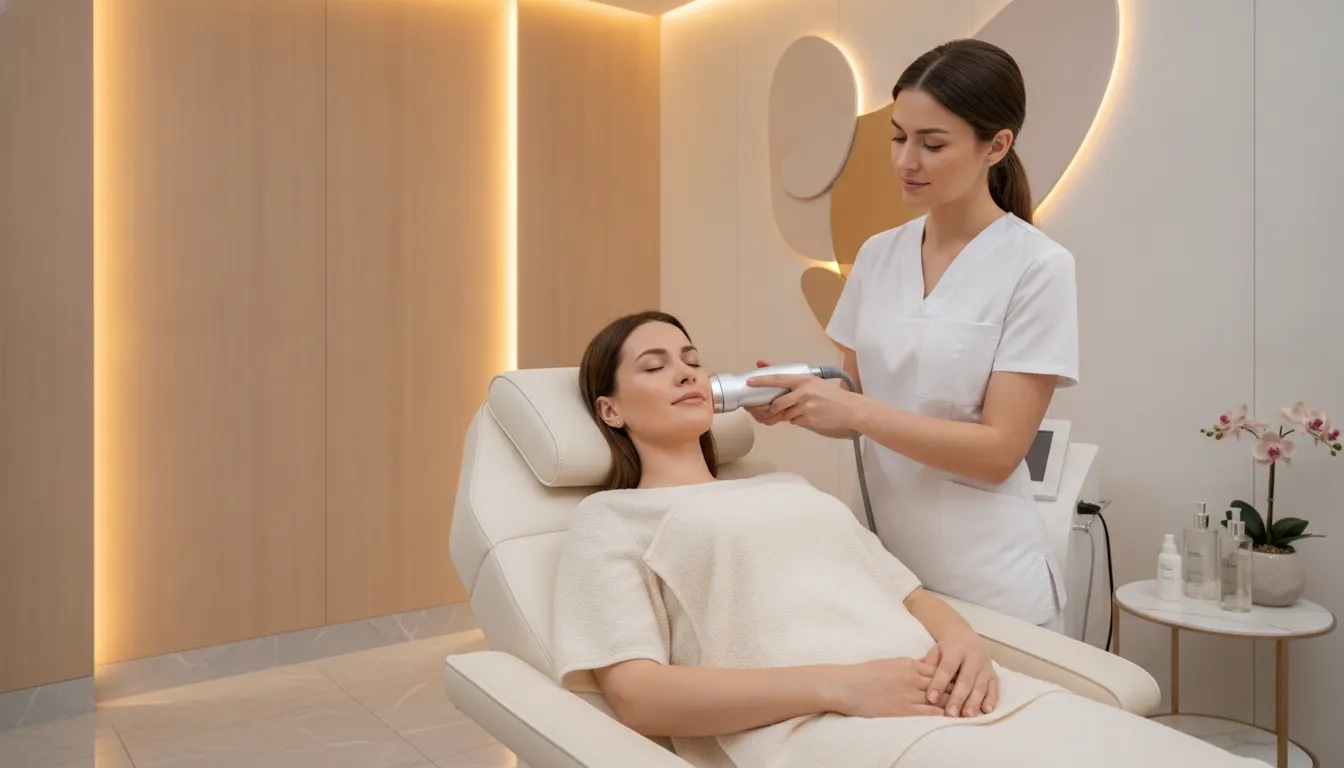
Loose or less resilient skin can change gradually, making the mirror feel different before you notice a clear reason. For many people, the goal is not a dramatic change, but a firmer, more supported appearance that still looks natural.
RF skin tightening uses electromagnetic energy to warm the deeper layers of skin, where controlled heat can encourage collagen and elastin production. As the skin remodels, it may appear smoother and firmer over time. The treatment is non-surgical, but candidacy and settings should be determined by a qualified provider. Learn more about the treatment mechanism. Results may vary.
Understanding what happens beneath the surface can make it easier to decide whether this approach fits your goals. The first step is to look closely at what the technology is, and what it is designed to do.
Schedule a consultation at Soul Glow Medspa
What Is RF Skin Tightening?
RF skin tightening is a non-surgical, energy-based treatment designed to improve the appearance of mild skin laxity and help skin look firmer. RF stands for radiofrequency. During treatment, a device delivers electromagnetic energy into targeted layers of the skin, where it creates controlled heat. This approach supports the body’s natural collagen and elastin response without making an incision or requiring anesthesia.
Unlike treatments that rely on pigment absorption or remove the outermost layer of skin, radiofrequency works by heating tissue beneath the surface. The provider uses a specific frequency and carefully controlled energy to warm the deeper skin layers while protecting the epidermis. This makes RF a useful option for people who want gradual rejuvenation with minimal downtime. Learn more about how RF skin tightening works.
Which areas can RF skin tightening treat?
Depending on your goals and the device used, treatment may be appropriate for the face, neck, arms, abdomen, and thighs. On the face and neck, patients often seek support for early laxity, fine lines, or a less defined jawline. On the body, RF may be used to improve the appearance of loose or crepey skin. A consultation helps determine whether the treatment area and energy level are appropriate for your anatomy, skin condition, and desired outcome.
RF skin tightening is non-invasive, but it is still a clinical aesthetic treatment. A qualified provider should review your medical history, explain realistic expectations, and tailor the plan to you. The experience is typically associated with little interruption to daily life, although the exact response varies by person and treatment area. Results may vary. The next step is understanding how controlled heat influences collagen and elastin over time.
How Does RF Skin Tightening Work?
RF skin tightening uses electromagnetic energy to create controlled heat in the deeper layers of the skin. Rather than relying on a surgical lift, the treatment directs energy into the dermis, where collagen and elastin provide much of the skin’s structure and resilience. The goal is to encourage a gradual remodeling response while keeping the outer surface protected.
As the dermal tissue warms, the controlled increase in temperature stimulates the body’s natural collagen response. This process can also support elastin production, helping the skin become firmer over time. The treatment is designed to heat the intended tissue without unnecessarily affecting the surface of the skin. You can read more about RF skin tightening compared with laser and ultrasound if you are evaluating different non-surgical options.
Why can the skin look tighter right away?
Heat affects collagen in two stages. First, existing collagen fibers contract when warmed, which may create an early sensation or appearance of increased tightness. This initial effect is not the complete result of treatment, but it can help explain why some patients notice a subtle change soon after a session.
The second stage takes place more gradually. The body’s repair and remodeling response supports the formation of new collagen after treatment. According to the Cleveland Clinic, the skin-tightening effect can continue to improve over the weeks that follow as new collagen develops. This timeline is one reason results should be assessed progressively rather than judged only on the day of treatment. Learn more about the RF mechanism and expected treatment response.
How is the treatment kept controlled?
Effective RF treatment depends on controlled delivery, not simply applying as much heat as possible. During the procedure, the provider monitors dermal temperature to heat the target layer while helping keep the epidermis safe. This allows the treatment approach to be adjusted for the patient’s skin, treatment area, and comfort level.
Because collagen remodeling continues for weeks and months, the final appearance develops over time. A provider can help determine whether RF is appropriate and whether a treatment series fits your goals. Results may vary based on individual skin characteristics, age-related changes, and the response of your tissue.
Who Is a Good Candidate for RF Skin Tightening?
RF skin tightening may suit adults who notice early changes in skin firmness but are not ready for surgery. Common concerns include mild sagging, fine lines, or a gradual loss of definition that makes the face, neck, or another treatment area look less refreshed. The treatment is designed for non-surgical rejuvenation, so it is often considered by people who want a gradual improvement without an incision or a lengthy recovery.
It can also fit different stages of an aesthetic-care plan. Some patients in their 30s choose RF treatment as “prejuvenation,” using collagen-supportive care before laxity becomes more pronounced. Patients in their 40s and 50s may seek rejuvenation for visible fine lines or mild looseness. Age alone does not determine candidacy. A provider should assess skin quality, treatment goals, medical history, and whether the expected outcome matches what the procedure can realistically provide.
The table below summarizes how candidacy is typically evaluated.
| Often a good candidate for RF skin tightening | Needs screening or may consider alternatives |
|---|---|
| Mild sagging, fine lines, or early loss of facial or neck definition | Significant excess skin that may respond better to a surgical lift |
| Aiming for gradual, non-surgical rejuvenation with minimal downtime | Living with a pacemaker or certain metallic implants |
| Wants a custom plan with realistic expectations and provider monitoring | Has an active skin condition, pregnancy concern, or implant your provider should review first |
Can RF skin tightening work for every skin tone?
RF energy is suitable for a wide range of skin tones and types because it is not affected by pigment in the same way as light-based treatments. This makes it a versatile option for patients with different complexions. However, “suitable for all skin tones” does not mean every person is automatically an appropriate candidate. Individual health factors, medications, skin conditions, and the area being treated still matter. A qualified provider can determine whether the energy, settings, and treatment plan are appropriate for you.
When should you discuss medical history before treatment?
Be candid about your complete medical history during consultation. People with pacemakers or certain metallic implants may need to avoid RF procedures because the energy can interact with implanted devices. The Cleveland Clinic advises that patients with pacemakers or certain implants should avoid this procedure. Review RF skin tightening safety guidance and tell your provider about implants, surgeries, chronic conditions, medications, and any active skin concerns before treatment.
A consultation is the right time to clarify your goals and discuss alternatives if RF is not appropriate. Your provider can also explain the likely pace of improvement and whether another treatment better addresses significant laxity. Results may vary, and an informed assessment is more valuable than pursuing a procedure solely because it is non-surgical.
What to Expect During an RF Skin Tightening Session
Your appointment is designed to feel calm, controlled, and personalized. The provider guides you through each stage, explains what you may feel, and adjusts the treatment according to your skin and comfort.
- Consultation and skin assessment. The visit begins with a review of your goals, skin concerns, and relevant medical history. Your provider assesses the treatment area and confirms whether RF skin tightening is appropriate for you. This is also the time to discuss questions, expected results, and any factors that could affect candidacy.
- Preparing the treatment area. The skin is cleansed and prepared before treatment. Your provider positions the handpiece over the selected area, such as the face, neck, or another clinically appropriate treatment site.
- Applying the handpiece. The handpiece is moved methodically across the skin. Radiofrequency energy creates controlled heat in deeper skin layers, where it can support the body’s natural collagen response. The surface of the skin is not the primary target of the energy.
- Feeling gentle warmth. Most patients describe the sensation as warm and comfortable as the dermis is heated. You may notice changes in warmth as the handpiece moves from one area to another. Tell your provider if the sensation becomes uncomfortable so the settings can be adjusted.
- Monitoring temperature and skin response. Your provider monitors the dermal temperature throughout the session. This helps keep the treatment controlled while protecting the surface of the skin. Careful monitoring is an important part of delivering heat-based treatment safely and consistently. Learn more about how RF skin tightening works.
- Returning to your routine. RF skin tightening typically requires no downtime, so patients can resume normal activities immediately after treatment. Your provider will explain any personalized aftercare recommendations and when to schedule follow-up care. Results may vary based on your skin, treatment plan, and response.
How Long Do RF Skin Tightening Results Last?
RF skin tightening is designed to improve firmness gradually, but its effects are not permanent. The treatment can create an early tightening effect as existing collagen fibers contract, while the deeper remodeling process continues afterward. New collagen production may keep improving the skin’s appearance for several weeks or months following treatment. So the final result should be judged over time rather than immediately after one visit. Learn more about the RF results timeline.
Why a treatment series may be recommended
Many clinics recommend approximately three to six sessions for optimal aesthetic results. A series gives the skin repeated opportunities to respond to controlled heat and build new collagen. The right schedule depends on the device, treatment area, skin condition, and your provider’s assessment. A consultation should clarify whether a series is appropriate for your goals instead of assuming that one standard protocol fits everyone.
Some patients notice an initial improvement in firmness, followed by more gradual changes as collagen remodeling develops. Others may see subtler results, particularly when laxity is more advanced or when expectations exceed what a non-surgical treatment can reasonably provide. Results may vary, and RF skin tightening is not a substitute for surgical lifting when significant excess skin is present.
Book a consultation to discuss your personalized treatment plan.
How maintenance can help preserve firmness
Because collagen naturally changes with age, maintenance sessions may be recommended after the initial treatment plan. The timing is individualized rather than fixed. Results may last several months, but the duration depends on skin health, existing collagen levels. The degree of laxity, and the rate at which your skin continues to age. Your provider can reassess your skin over time and recommend maintenance based on how your results develop.
Daily care also supports the appearance of treated skin. Consistent sun protection helps limit environmental damage, while adequate hydration supports healthy-looking skin. These habits do not stop natural aging, but they can complement the effects of treatment and help you maintain a smoother, firmer appearance between visits.
Is RF Skin Tightening Safe?
For most appropriately screened patients, RF skin tightening is a non-invasive treatment with a generally favorable safety profile. It uses controlled radiofrequency energy rather than surgery, incisions, or anesthesia. The energy warms targeted tissue beneath the skin while the provider manages treatment settings and protects the surface.
Because radiofrequency energy is not dependent on melanin, it can be suitable for a wide range of skin tones and types. This makes it different from treatments whose results or risks may be more directly affected by pigment. Even so, suitability is individual. A consultation should address your skin concerns, treatment area, goals, medications, and complete medical history before a provider recommends RF therapy.
Who should avoid RF treatment?
People with pacemakers or certain metallic implants may not be candidates for RF skin tightening. Radiofrequency energy can interact with some implanted devices or metal, so do not assume a treatment is appropriate based only on the fact that it is non-surgical. Tell your provider about any pacemaker, implanted cardiac device, metal hardware, or other medical implant before treatment. The provider can determine whether the technology is safe for your circumstances or whether another approach is more appropriate. Cleveland Clinic guidance also advises patients with pacemakers or certain implants to avoid this procedure.
During treatment, experienced providers use appropriate technique and monitor the skin’s response. That oversight helps deliver useful heat to the intended tissue while reducing the risk of excessive surface heating. Ask what device will be used, how your temperature and comfort will be monitored, and what aftercare is recommended.
How can you support safe, lasting results?
Follow the provider’s aftercare instructions and protect your skin from unnecessary sun exposure. Daily broad-spectrum sun protection helps limit ongoing photoaging, while consistent hydration supports healthy skin function. These steps complement treatment, but they do not replace medical screening or guarantee a particular outcome.
RF skin tightening can be a reasonable option for many patients seeking gradual, non-surgical improvement, provided candidacy is confirmed by a qualified professional. Results may vary.
Matrix Pro RF and Skin Treatments at Soul Glow Medspa
Matrix Pro RF is part of the Skin Treatments line at Soul Glow Medspa. The practice is a boutique medical aesthetics and wellness studio in Farmers Branch serving North Dallas. The treatment uses a mono and bipolar sequential pulsation device to deliver controlled radiofrequency energy into the dermis. By warming this deeper layer, the technology supports the skin’s natural collagen response without being a surgical procedure.
This approach may be appropriate for patients who want to address mild laxity, fine lines, or changes in firmness while keeping treatment practical. Matrix Pro RF is non-invasive and associated with minimal downtime. Depending on the treatment plan, it can be used on the face, neck, arms, abdomen, and thighs. The appropriate areas, energy settings, and treatment schedule should be determined during a provider consultation.
Soul Glow’s approach combines clinical oversight with the calm, personal experience of a high-end spa. Ariadna Sanchez, ARNP, FNP-BC, and Jordan Busansky, RN, BSN, co-founded the practice under the medical direction of Dr. Ricardo Martinez. That structure supports individualized planning rather than a one-size-fits-all protocol. It also reflects Soul Glow’s broader hybrid model, which brings medical aesthetics, wellness, and advanced procedures together in one setting.
As an early DFW adopter of this RF technology, Soul Glow offers Matrix Pro within a broader menu of rejuvenation services. Patients can explore professional RF skin tightening treatments alongside other options in the Skin Treatments line. Matrix Pro RF is distinct from Matrix Pro RF microneedling, so your consultation is an important opportunity to clarify which treatment best matches your goals and skin condition.
Results may vary. A thoughtful assessment can help set realistic expectations for visible firmness, treatment areas, and whether Matrix Pro belongs in a broader skin rejuvenation plan.
Schedule a personalized Matrix Pro RF consultation at Soul Glow Medspa.
Frequently Asked Questions
Is RF skin tightening safe for all skin tones?
RF skin tightening is generally suitable for a wide range of skin tones because radiofrequency energy is not primarily absorbed by pigment. A provider should still review your health history, medications, and treatment goals. Pacemakers and certain metallic implants may make RF treatment inappropriate, so disclose them during consultation. Cleveland Clinic outlines these candidacy considerations. Results may vary.
Does RF skin tightening hurt?
Most patients describe the treatment as warm and comfortable rather than painful. Your provider controls the energy and monitors skin temperature while treating the deeper tissue and protecting the surface. Tell your provider if the sensation becomes uncomfortable so the settings can be adjusted appropriately.
How soon can I return to normal activities?
RF skin tightening typically involves no downtime, so many patients can return to normal activities immediately. Your provider will explain any temporary redness, sensitivity, or aftercare considerations based on the device and area treated. Protecting your skin from excess sun and maintaining hydration can support your overall treatment plan.
How many sessions will I need?
The recommended number depends on your skin laxity, treatment area, and desired change. A series of three to six treatments is commonly recommended for aesthetic results, followed by maintenance as appropriate. Collagen remodeling continues for weeks or months after treatment, so your plan should allow time to evaluate progress rather than judging the outcome immediately.
Can RF skin tightening treat loose skin on the body?
Yes. Depending on your goals and candidacy, RF may be used on areas such as the face, neck, arms, abdomen, and thighs. It is intended to improve skin firmness, not replace surgical excision or serve as a weight-loss treatment. A consultation can clarify whether the treatment matches your concern and expectations.
Ready to Explore RF Skin Tightening?
A consultation can help you understand whether RF skin tightening fits your skin goals, treatment history, and expectations. Soul Glow Medspa can discuss appropriate options and outline what a personalized plan may involve. Results may vary. Book a consultation at Soul Glow Medspa to take the next step.
