
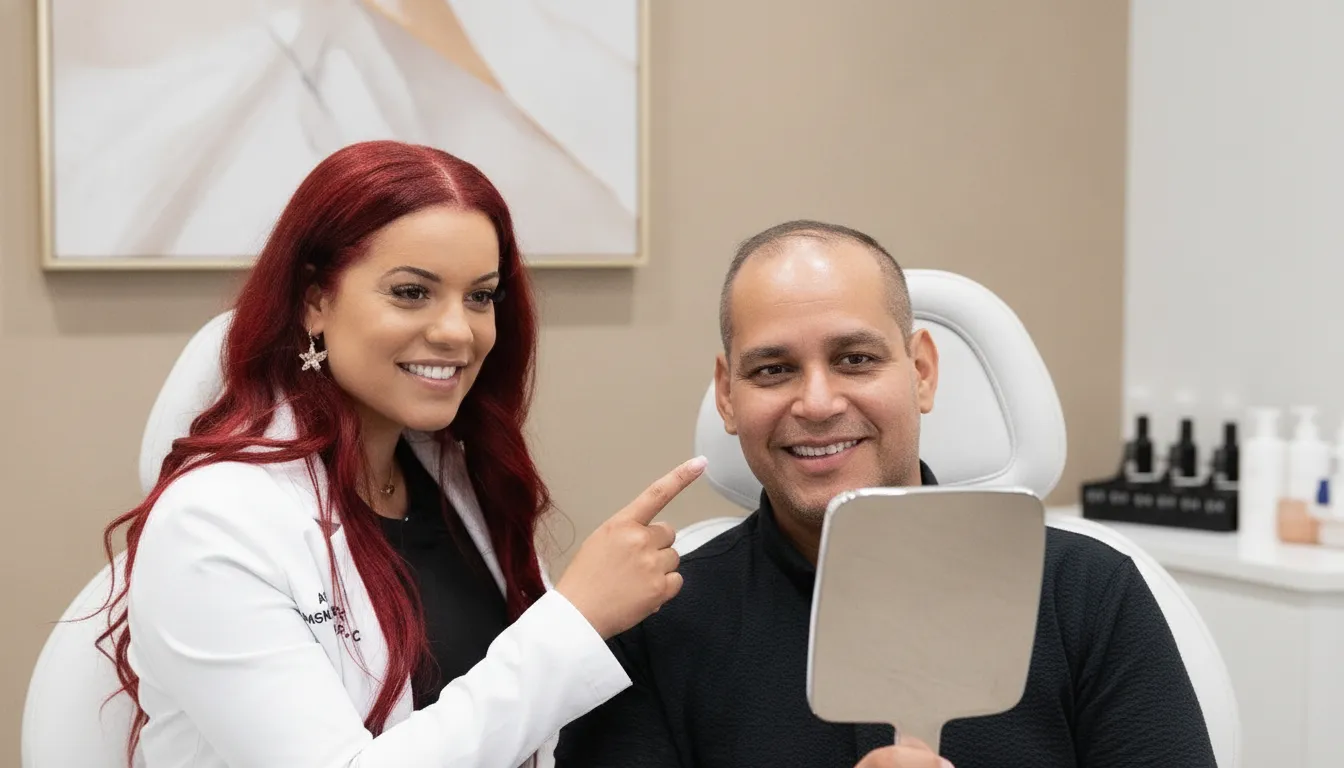
Wrinkle-relaxing injections are best understood as a gradual change, not an instant reveal. Dysport is used to soften moderate to severe frown lines between the eyebrows by temporarily relaxing the facial muscles that create them. Soul Glow Medspa describes a typical onset within 2 to 3 days, with results that may last up to four months, although individual response varies.
Dysport before and after photos can help illustrate how frown lines may look when facial movement is reduced, but they cannot predict your exact outcome. Lighting, expression, angle, timing, muscle activity, dose, and anatomy all affect a comparison, so results should be evaluated with realistic expectations and guidance from a qualified provider.
Contact Soul Glow Medspa to discuss your Dysport goals.
A treatment visit is often brief, with Soul Glow listing an approximately 10 to 20 minute session and minimal downtime. Before focusing on timelines or candidacy, it helps to understand what photographs can show, and what they leave out.
What Can Dysport Before and After Photos Really Show?
Well-matched photos can help you understand the type of change Dysport may create in the frown lines between the eyebrows. Dysport temporarily relaxes targeted facial muscles. A comparison may show less visible movement and a softer appearance when the area is photographed at rest or during a frown. It can help you see how dynamic lines may look when repeated muscle activity is reduced.
Photos are most useful when they show the same person, treatment area, facial expression, camera distance, and general lighting before and after treatment. Even small differences can change how lines appear. Bright overhead light may emphasize texture, while softer light can make the skin look smoother. A raised brow, a partial smile, a different camera angle, or a change in focus can also affect the comparison. Makeup, skincare, hydration, and the natural progression of expression lines may influence what you notice.
Timing matters as well. A photo taken immediately after an appointment does not show the finished effect. The treatment may become noticeable over the first several days, and the appearance can continue to evolve as muscle activity changes. For that reason, a single image should not be treated as a precise forecast for your own result.
When reviewing Dysport before and after photos, look for consistent conditions and ask what the images actually document. Do they show the same expression? Was the follow-up taken at a meaningful interval? Is the comparison focused on the frown lines Dysport is intended to address? These questions can help you evaluate examples with a more informed perspective.
Soul Glow Medspa describes Dysport as a treatment for moderate to severe frown lines between the eyebrows. You can review the Dysport treatment details, then discuss your facial movement, goals, medical history, and expectations during an individualized consultation. Results may vary, and photos are examples rather than promises.
With that context in mind, the next question is how soon changes may become visible after treatment.
When Will You See Dysport Results?
Dysport does not change facial movement instantly. Soul Glow Medspa explains that it commonly begins taking effect within two to three days, but the pace and degree of visible change differ from person to person. Early changes may be subtle. You may notice that frown lines between the eyebrows look softer or that the treated muscles do not contract as strongly when you make an expression.
Over the following days, the effect can continue to develop as the product temporarily relaxes targeted facial muscles. This gradual progression is one reason it is more useful to assess your appearance over time than to judge the result in the first 24 hours. Your provider can explain when to evaluate the outcome based on your treatment plan and goals.
What can affect the timeline?
Several individual factors can influence what you see. These include the strength and pattern of muscle movement, the depth of existing lines, the treatment area, and the plan selected during your assessment. Your provider also considers your anatomy, medical history, and desired level of movement when determining whether Dysport is appropriate and how it should be used.
Before-and-after photos can help illustrate the type of change a wrinkle-relaxing treatment may create, but they do not predict an identical result for every patient. Lighting, facial expression, camera angle, and the timing of each photo can affect the comparison. For a more complete overview of the service and its typical timeline, review the Dysport treatment details.
How long can Dysport last?
Soul Glow lists results as potentially lasting up to four months. That is an estimate, not a promise. The effect gradually wears off as muscle activity returns, and the timing may vary with individual biology, muscle activity, treatment goals, and other factors. Some patients may notice their lines becoming more visible sooner, while others may experience a longer period of softening.
A thoughtful plan focuses on natural-looking improvement rather than stopping all facial expression. Results may vary, so your provider should be your source for personalized expectations, follow-up guidance, and any questions about changes after treatment.
What Happens During a Dysport Treatment Day?
A Dysport appointment should feel like a measured clinical conversation, not a rushed injection. Your provider first learns what you would like to improve, reviews relevant health information, and explains what the treatment can and cannot reasonably do. This helps connect your expectations with a plan that respects your facial movement and features.
- Consultation and candidacy review: You will discuss your goals, medical history, and any questions about Dysport. The provider uses this conversation to determine whether the treatment is appropriate for you and whether another option may better support your concerns. Consent and aftercare information should be reviewed before treatment begins.
- Facial movement assessment: The provider observes your natural expressions and evaluates the muscles and areas contributing to the lines you want to address. For Dysport, this commonly includes the frown lines between the eyebrows. Placement and the treatment plan are individualized rather than based on a one-size-fits-all pattern.
- Cleansing and injections: The treatment area is prepared, and the product is administered at selected points using a fine needle. You may feel brief pinches or pressure during the injections. Let your provider know if you need a pause or have concerns about comfort.
- Allowing time for the appointment: Soul Glow Medspa lists an approximate 10-20 minute Dysport session. The full visit may take longer when consultation, assessment, consent, and questions are included. A short appointment does not mean the planning portion should be skipped.
- Aftercare and follow-up guidance: Before you leave, your provider should explain what to expect next and how to respond to questions or concerns. Follow the individualized guidance you receive rather than copying instructions from an online source. Minimal downtime is commonly associated with this treatment, but temporary redness, tenderness, or swelling can occur, and individual experiences vary.
It is normal for questions to continue after you leave, especially when you are comparing your Dysport before and after progress over time. Results are not immediate for everyone, and photographs can look different based on expression, lighting, angle, and timing. Your provider can help you assess changes realistically and advise whether follow-up is appropriate. Results may vary.
Who May Be a Candidate for Dysport?
Dysport may be worth discussing if you are concerned about expression lines between the eyebrows, sometimes called glabellar or frown lines. These lines are influenced by facial muscle movement, but the right approach depends on more than the area you want to treat. A qualified provider will consider your goals, facial anatomy, muscle activity, skin, and relevant medical history before recommending a plan.
Some patients are looking for a softer, more rested appearance while still wanting natural facial movement. Others may be exploring Dysport treatment details after reviewing before-and-after photos. Those images can help explain the type of change a treatment may create, but they cannot predict your result. Differences in expression, lighting, angle, timing, and anatomy all affect a comparison. Results may vary.
Why might a provider recommend a different approach?
An assessment may lead to a conversation about adjusting the treatment area, changing the plan, waiting until another time, or considering an alternative. The reason may relate to the pattern or strength of muscle movement, the appearance you want, your medical history, or whether a wrinkle-relaxing treatment matches the concern you are trying to address. Not every line or facial change responds to the same type of treatment.
This discussion is not a diagnosis and should not be replaced by an online checklist. Share your health history, current medications, allergies, prior aesthetic treatments, and expectations openly during your consultation. Your provider can explain whether Dysport fits your goals, what a conservative plan may involve, and what other options might be more appropriate. At Soul Glow Medspa, medical oversight and individualized planning are central to the treatment conversation. This helps you make an informed decision rather than choose based on a photo alone.
How Should You Compare Dysport With Other Wrinkle Relaxers?
Dysport, Botox, Xeomin, and Letybo are all wrinkle-relaxer options that may be considered for expression lines. The most appropriate choice is not determined by a brand name alone. Facial anatomy, muscle movement, treatment goals, medical history, and the provider’s assessment all shape an individualized plan. A consultation is the right setting to discuss these factors and review whether an injectable treatment fits your needs.
| Option | What to discuss with your provider |
|---|---|
| Dysport | Whether its use aligns with your treatment area, facial movement, goals, and medical history. |
| Botox | Whether this wrinkle-relaxer option suits the intended area and the result you want to maintain. |
| Xeomin | How this option fits your anatomy, treatment priorities, and overall clinical plan. |
| Letybo | Whether it is an appropriate option for your goals after a qualified provider reviews your history. |
Comparing products also means comparing the plan around them. Your provider should explain the intended placement, expected timeline, aftercare guidance, and how progress will be evaluated. Soul Glow describes Dysport for moderate to severe frown lines between the eyebrows. Effects generally begin within two to three days and may last up to four months. This is an estimate, not a guarantee. You can review the practice’s injectable treatments to understand the broader service line before discussing your options.
When reviewing Dysport before and after photos, remember that lighting, expression, angle, timing, and individual anatomy can affect the comparison. Photos can support a conversation, but they cannot predict your result. Results may vary, so use your consultation to ask thoughtful questions and establish realistic expectations.
Book a consultation to review your treatment options.
Frequently Asked Questions
How soon will I notice Dysport results?
Some patients begin noticing softer frown lines within two to three days, while the visible change develops progressively. In a pooled clinical analysis, almost two-thirds of participants reported onset within three days, but timing varies with individual muscle activity and treatment factors. Results may vary.
How long do Dysport results typically last?
Soul Glow Medspa describes results as lasting up to four months, although duration differs from person to person. Muscle activity, treatment planning, and individual response can affect how long the smoothing effect remains visible. A qualified provider can help you plan maintenance based on your results rather than a fixed schedule.
What does a typical Dysport appointment involve?
The visit generally includes a discussion of your goals and medical history, an assessment of facial movement, and an individualized plan for placement and dosage. Soul Glow lists an approximate 10 to 20 minute session with minimal downtime, though your experience may differ. Your provider should also explain aftercare and what changes to expect.
Who may be a candidate for Dysport?
Candidacy is an individualized clinical decision. Dysport is commonly considered for adults seeking temporary improvement in moderate to severe glabellar lines between the eyebrows. But your anatomy, muscle activity, goals, and medical history all matter. A consultation is the right setting to discuss whether Dysport fits your needs or whether another approach would be more appropriate. Results are not guaranteed.
Contact us to discuss your Dysport goals
A personalized conversation can help you understand whether Dysport fits your facial anatomy, treatment goals, and expectations for timing and results. Results may vary, so candidacy and planning should be discussed with a qualified professional. To discuss your questions and next steps, contact Soul Glow Medspa.
