
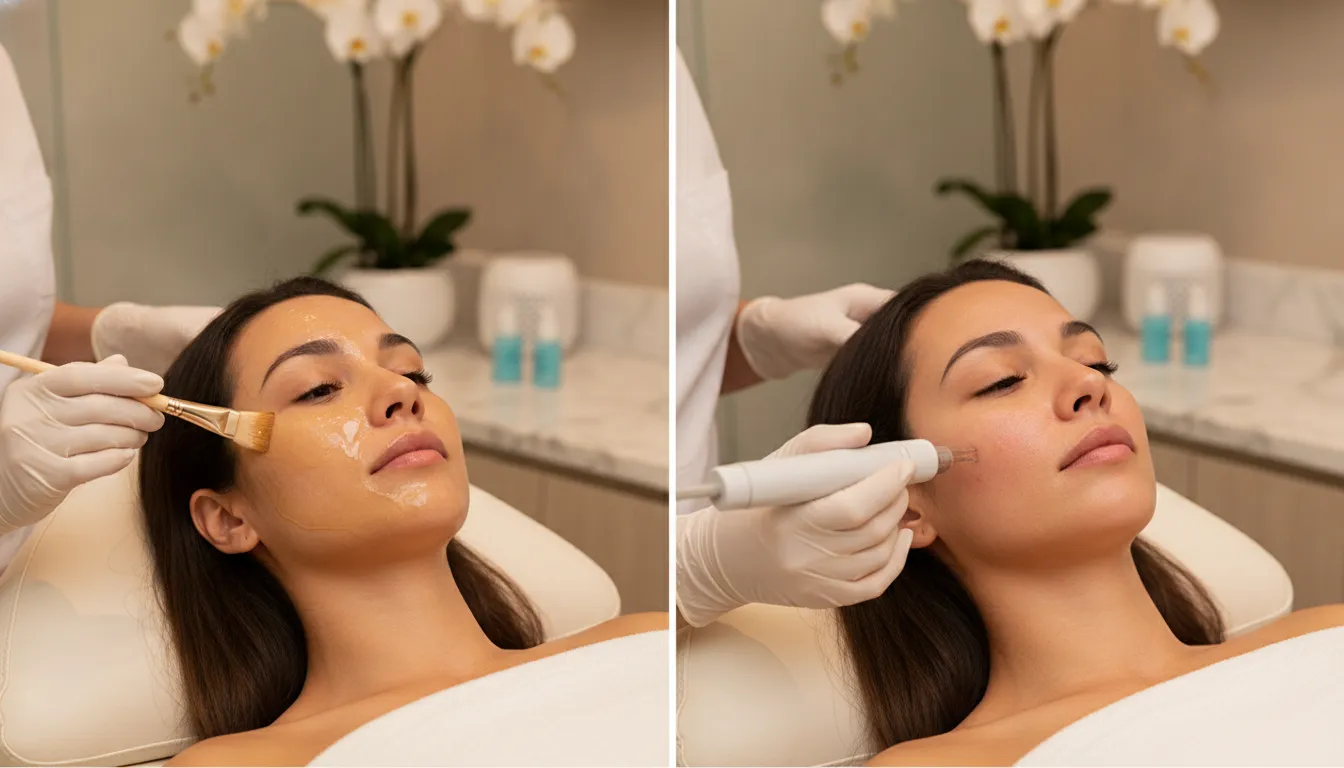
When you compare microneedling vs chemical peel acne scars, you are usually trying to match a treatment to a specific concern, not find a universal winner. Acne scarring can involve uneven texture, depressed areas, lingering color changes, or several concerns at once. This guide explains how the options differ for patients in Dallas, Farmers Branch, and North Dallas.
Schedule a personalized acne scar treatment consultation
Microneedling and chemical peels address acne-scar concerns in different ways. Microneedling supports collagen remodeling through controlled micro-injuries, while a chemical peel removes a selected surface layer. The better fit depends on scar type, skin tone, current skin health, recovery preferences, and professional assessment. Results may vary.
For broader context, start with Skin Treatments at Soul Glow Medspa. The comparison below is educational and does not replace an evaluation by a qualified medical team.
How Does Microneedling vs Chemical Peel Acne Scars Treatment Work?
Microneedling creates controlled microchannels that can support collagen formation and gradual texture improvement. A chemical peel applies a selected solution to exfoliate a planned depth and refresh the surface. Because the treatments act differently, the appropriate choice depends on whether texture, color, or another concern is most important.
Microneedling uses a device with fine needles to create controlled micro-injuries in the skin. The intended response is a healing and remodeling process that supports collagen formation. This approach may be considered when shallow depressed texture, visible pores, or overall skin smoothness are central goals. Improvement is gradual, and repeat treatments may be recommended. Mayo Clinic describes microneedling as a potentially effective acne-scar treatment while noting that results can be subtle and may require more than one session. Review Mayo Clinic’s acne-scar treatment guidance.
A chemical peel applies a selected chemical solution to the skin. The solution removes a controlled top layer, with the depth and formulation influencing the experience and potential result. A peel may be considered when surface roughness, dullness, or post-acne color changes are more noticeable than a depressed contour. Peel selection is not one-size-fits-all. Skin tone, sensitivity, current products, sun exposure, and the condition of the skin all matter.
Primary mechanism: Microneedling uses controlled needle passes to support collagen remodeling. A chemical peel uses a selected solution to exfoliate a planned surface depth.
Common focus: Microneedling may address depressed texture, pores, and overall smoothness. A chemical peel may address surface roughness, dullness, and selected color concerns.
Recovery pattern: Microneedling may involve temporary redness, sensitivity, tightness, or dryness. A chemical peel may involve tightness, dryness, flaking, or peeling depending on depth.
Planning priority: Microneedling planning considers settings, technique, scar pattern, and treatment interval. Peel planning considers formulation, strength, skin tone, and treatment depth.
Neither treatment erases every scar, and neither is automatically stronger. The best plan begins by identifying what is actually present and what the patient wants to improve. A consultation can also distinguish acne scars from active acne or post-inflammatory color changes, which may call for a different sequence of care.
Which Option Fits Microneedling vs Chemical Peel Acne Scars by Scar Type?
Microneedling is often considered when depressed or uneven texture is the main concern. A chemical peel may be considered when flat discoloration, dullness, or superficial roughness is more prominent. Mixed concerns may require prioritization or a carefully sequenced plan, rather than an automatic combination.
Acne scarring is not one condition with one appearance. Flat brown or red marks can make the skin look uneven without changing its contour. Rolling or shallow depressed scars create a texture concern. Narrow, deeper scars and raised areas require a careful assessment because a general resurfacing recommendation may not address them appropriately.
When texture or shallow depressions are the main concern
Microneedling may be considered for selected depressed texture because its mechanism works within the skin rather than only removing the surface. The goal is gradual remodeling, not an instant resurfacing effect. A clinician will consider the distribution and depth of the scars, current skin health, prior treatments, and whether active inflammation is present.
A chemical peel may still have a role for surface roughness, but a surface-focused treatment should not be presented as a universal answer for deeper contours. The treatment plan should state what improvement is realistic and which concerns may need another approach.
When discoloration or surface roughness stands out
A peel may be considered when flat post-acne marks, uneven tone, or superficial roughness are more noticeable than indentation. The solution and treatment depth matter. A stronger treatment is not automatically better, especially when pigmentation risk, sensitivity, or recovery time are important considerations.
Skin tone deserves specific attention. Mayo Clinic notes that chemical peels can cause changes in skin color, particularly with deeper peels used on dark skin. Microneedling also is not risk-free, so patients should discuss pigmentation history, sensitivity, medications, and current skin products before treatment. A conservative, informed plan is more useful than choosing from a generic before-and-after photo.
Patients can also review the dedicated chemical peel treatment information and the microneedling service page before a consultation. Those pages provide service context, while an evaluation determines which option is appropriate for an individual.
What Is the Downtime for Microneedling and Chemical Peels?
Downtime varies with microneedling settings, peel formulation and depth, skin sensitivity, and individual response. Microneedling may cause temporary redness or sensitivity. A chemical peel may cause dryness, tightness, flaking, or visible peeling. Ask about the specific plan instead of relying on a universal number of recovery days.
After microneedling, temporary redness, tightness, sensitivity, or mild swelling may occur. The appearance generally settles as the skin responds, but the intensity and duration vary. Because collagen remodeling develops over time, the immediate post-treatment appearance is not the final result. Your provider may recommend a series or a specific interval between appointments.
A chemical peel can cause sensitivity, dryness, flaking, or peeling as the treated skin renews. The recovery experience depends heavily on the solution and intended depth. A lighter peel and a deeper peel should not be described as if they create the same experience. Ask what visible changes are expected, what products should be paused, and when normal skincare can resume.
Responsible aftercare commonly includes gentle cleansing, avoiding unnecessary friction, protecting the skin from sun exposure, and following the instructions provided for the selected treatment. Do not pick or scrub peeling skin. Your clinician may also recommend pausing certain active ingredients while the skin barrier recovers. Results may vary, and a responsible provider should explain warning signs and follow-up expectations.
Dallas-area patients may also want to plan around outdoor activities, work commitments, and events. Recovery preferences are part of treatment selection, not an afterthought. If you are considering a broader resurfacing plan, explore laser skin rejuvenation information as another discussion point, not as a substitute for personalized guidance.
Talk with Soul Glow Medspa about acne scar treatment options
Can You Combine Microneedling and a Chemical Peel?
Some patients may be considered for a combination or sequence of microneedling and chemical peel treatments, but combining them is not an automatic upgrade. A clinician must consider scar type, skin tone, inflammation, barrier health, treatment depth, timing, and aftercare before recommending more than one resurfacing approach.
Combination care may be discussed when acne scarring includes both textural irregularity and selected surface concerns. Microneedling supports collagen remodeling, while a peel addresses the surface through controlled exfoliation. The treatments may be performed in a sequence rather than during the same appointment. The order, interval, and intensity should be chosen by a qualified clinician.
Active breakouts, irritation, a weakened skin barrier, a history of difficult healing, recent sun exposure, or a tendency toward pigment changes may affect candidacy and timing. Combining treatments should not be used to promise faster or greater improvement. The safe and useful plan is the one that matches the skin’s condition and allows for appropriate recovery.
What does the research say?
A 2025 PubMed-indexed systematic review and meta-analysis examined chemical peeling combined with microneedling compared with either treatment alone for acne scars. That research supports discussing combination care as an area of clinical study, but it does not establish that every protocol is equivalent or appropriate for every patient. Evidence should inform a treatment conversation, not replace it. Read the systematic review and meta-analysis on PubMed.
Patients interested in related options can also review Soul Glow Medspa’s PRP microneedling guide, then discuss whether that topic is relevant to their goals. It is important to keep treatment names and expectations clear rather than treating every procedure as interchangeable. Results may vary.
How Should You Choose Between These Acne Scar Treatments?
Choose a treatment after identifying the scar concern, reviewing skin history, discussing depth and recovery, and setting realistic expectations. A qualified provider can determine whether microneedling, a chemical peel, a planned sequence, or another option better fits the skin’s current condition and the patient’s goals.
- Identify the visible concern. Describe whether you notice depressed texture, shallow unevenness, lingering discoloration, roughness, or a combination. Mention whether acne is still active. This helps the clinician distinguish a texture-focused discussion from a surface-color discussion.
- Review your skin history. Share sensitivity, previous peels or resurfacing, pigment changes after inflammation, current products, medications, and healing concerns. Skin tone and pigmentation history are important parts of a responsible peel or microneedling evaluation.
- Discuss the treatment plan. Ask about the selected formulation or microneedling settings, preparation, aftercare, sun protection, product pauses, and the expected recovery pattern. Ask what would change the plan if the skin is inflamed or unusually reactive.
- Set realistic expectations. Acne-scar improvement is usually a process. Microneedling may produce gradual and subtle change, while peel results depend on the selected depth and individual response. No ethical assessment should promise a specific outcome. Results may vary.
- Plan follow-up. Choose a provider who will reassess the response and adjust care as the skin changes. Soul Glow Medspa serves patients in Farmers Branch and North Dallas in a calm, informed setting centered on personalized treatment planning.
For an additional service overview, visit the Soul Glow skin treatments hub. A consultation is the appropriate place to compare options, review candidacy, and decide what should be prioritized first.
Schedule your acne scar consultation before the FAQ
Frequently Asked Questions
Is microneedling or a chemical peel better for acne scars?
Neither is universally better. Microneedling may be considered when depressed or uneven texture is the main concern, while a chemical peel may be considered for selected surface roughness or discoloration. The right choice depends on scar type, skin tone, severity, current skin health, and realistic recovery preferences. Results may vary.
Which treatment is better for deep acne scars?
Deep or narrow scars require an individual assessment because their depth and shape may not respond to a general resurfacing plan. Microneedling may be discussed for selected texture concerns, while a peel may fit selected surface concerns. A clinician should explain which improvement is realistic before treatment.
How different is downtime between microneedling and chemical peels?
Recovery depends on treatment intensity, peel depth, skin sensitivity, and individual response. Microneedling may cause temporary redness or sensitivity. A peel may cause tightness, dryness, flaking, or peeling. Your provider should explain the expected recovery for the specific plan rather than promise a fixed timeline.
Can microneedling and chemical peels be used together?
They may be combined or sequenced when a clinician believes both approaches fit the patient’s skin and scar pattern. The timing and intensity should be individualized. A systematic review has examined combination treatment, but that evidence does not make combination care suitable for everyone.
Is microneedling suitable for every skin type?
Microneedling is not automatically suitable for every person or every skin condition. The evaluation should consider pigmentation history, sensitivity, active breakouts, inflammation, medications, and healing concerns. A qualified clinician can explain the benefits, limits, alternatives, and aftercare before recommending treatment.
Ready to Compare Acne Scar Treatments in Dallas?
A personalized evaluation can clarify whether microneedling, a chemical peel, or a carefully planned sequence fits your scar type, skin concerns, and schedule. Soul Glow Medspa serves Farmers Branch and North Dallas with a luxurious, intimate setting and patient-centered treatment planning. Results may vary.
When you are ready to discuss your options, contact Soul Glow Medspa to begin the conversation.
