
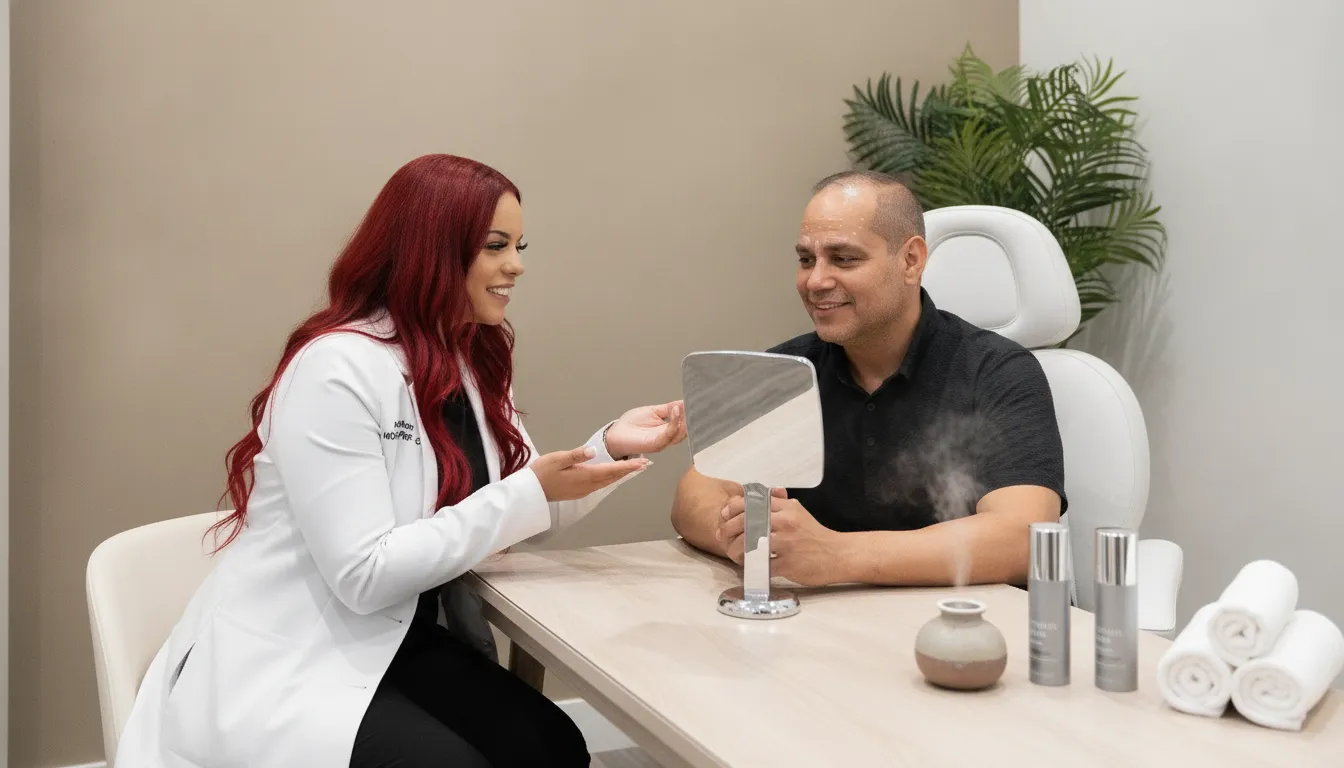
Searching for wellness care close to home is only the first step. The more important question is whether the program is medically guided, appropriate for your goals, and clear about benefits, risks, and follow-up. When adults search for peptide therapy near me, they may be referring to several different approaches. For broader context, explore Soul Glow Medspa’s Wellness and Body Contouring at Soul Glow Medspa: NAD+, GLP-1, and More guide.
Contact Soul Glow Medspa to discuss your wellness goals.
Peptide therapy is an umbrella term, and peptides do not all have the same evidence, uses, dosing, or risks. A thoughtful evaluation may review your health history, medications, goals, and relevant measurements or labs when clinically indicated. Results may vary.
In Farmers Branch and North Dallas, Soul Glow Medspa provides wellness services at Soul Glow Medspa and offers a medically guided setting for discussing available options. You can also explore peptide therapy in Farmers Branch before speaking with the medical team. First, it helps to understand what peptides are and how they interact with the body.
What Are Peptides and How Do They Work in the Body?
Peptides are short chains of amino acids, the building blocks used to form proteins. A peptide generally contains between two and 50 amino acids joined by covalent bonds. In the body, peptides participate in many physiological and biochemical processes, so the word describes a broad biological category rather than one specific treatment. The National Center for Biotechnology Information explains peptide structure and function in more detail.
Some peptides act as signaling molecules. They can interact with receptors or other biological pathways, helping influence processes such as appetite, metabolism, immune activity, tissue communication, or repair. However, those effects depend on the specific peptide, its formulation, the way it is administered, and the patient’s health. It is not accurate to assume that every peptide produces the same response or carries the same level of evidence.
That distinction matters when you see the phrase peptide therapy. It is an umbrella term that may refer to different medications or wellness approaches. For example, GLP-1-related medications are a distinct category from other peptide-related treatments, with their own indications, screening considerations, dosing decisions, and potential risks. A medically guided discussion should identify the exact product or approach being considered. Explain what is known about it, and determine whether it fits your goals and medical history. Soul Glow Medspa does not present every peptide as universally appropriate or imply that all options are available to every patient. Results may vary.
What Can Peptide Therapy Near Me Support?
Peptide therapy is an umbrella term, not a single treatment or standardized menu. The appropriate option depends on the specific medication or wellness treatment, the evidence behind it, your health history, and your goals. At Soul Glow Medspa, medical wellness is a core treatment area alongside aesthetics, with offerings that include IV hydration, NAD+ treatments, medical weight loss, and vitamin optimization. You can explore the broader wellness services at Soul Glow Medspa, review the Wellness and Body Contouring at Soul Glow Medspa: NAD+, GLP-1, and More pillar guide, or learn more about peptide therapy in Farmers Branch.
For some appropriate patients, the goal is medically guided weight management. GLP-1-related medications are a distinct category within the broader peptide conversation. Soul Glow provides information about semaglutide treatment information and tirzepatide treatment information, including the need for clinical screening and individualized guidance. Tirzepatide may influence appetite and satiety for appropriate patients, while semaglutide is discussed as a GLP-1 medication used within a supervised weight-management plan. Neither should be treated as a universal solution or self-directed wellness shortcut.
Other patients may be exploring broader energy, recovery, hydration, or healthy-aging goals. Those discussions may overlap with services such as NAD therapy and wellness support, but NAD+ treatment is not interchangeable with a GLP-1 medication or every other peptide-related therapy. The terms, potential benefits, risks, and monitoring requirements can differ substantially.
| Wellness conversation | What it may involve | What to clarify |
|---|---|---|
| Peptide-related treatment. | A specific product or approach selected for an individual goal. | Evidence, intended use, dosing, risks, and monitoring. |
| GLP-1-related medication. | Medically guided weight-management support for appropriate patients. | Screening, medication history, side effects, and follow-up. |
| NAD+ or IV wellness support. | A separate wellness service that may relate to hydration, energy, or recovery goals. | Whether it fits your history and goals, and how it differs from peptide treatment. |
A consultation helps clarify which goals are clinically appropriate and which service, if any, fits your needs. Treatment suitability, benefits, risks, and results vary by patient. Results may vary.
Who May Be a Candidate for Peptide Therapy?
There is no single checklist that makes someone a candidate. Peptide therapy is an umbrella term, and different peptide-related medications or wellness approaches have different purposes, evidence, dosing considerations, and risks. A thoughtful evaluation begins with your health history, current medications, wellness goals, and the outcomes you hope to support.
A clinician may also review relevant measurements or order labs when they are clinically indicated. That information can help the medical team decide whether a particular approach is appropriate, whether another option deserves consideration, or whether an underlying concern should be addressed first. Informed consent and a clear discussion of expected benefits, limitations, and potential risks should be part of that conversation.
Weight-management medications illustrate why self-screening can be misleading. Soul Glow’s semaglutide information describes clinical screening and notes possible eligibility thresholds involving BMI, but those criteria apply to semaglutide evaluation, not automatically to every peptide therapy. Pregnancy or breastfeeding, certain medical conditions, allergies, and medication interactions may also affect candidacy for a specific treatment. Share your complete history rather than assuming that a treatment is suitable based on a number or an online result.
For patients exploring wellness services at Soul Glow Medspa in Farmers Branch and North Dallas, the next step is a medically guided assessment. Your plan, if appropriate, may include individualized dosing, lifestyle support, and follow-up monitoring. Treatment suitability, benefits, risks, and outcomes vary by patient. Results may vary, and peptide therapy should not replace comprehensive medical care or professional diagnosis.
How Is Peptide Therapy Personalized and Monitored?
A responsible program begins with clinical context, not a standard protocol. Because peptide therapy is an umbrella term, the appropriate approach depends on the specific therapy, your health history, current medications, goals, and medical assessment. A medically guided program may include the following steps:
- Discuss your goals and health history. During consultation, the medical team reviews what you want to address, relevant symptoms or wellness goals. Past and current conditions, medications, allergies, and other factors that may affect candidacy. Measurements or laboratory testing may be considered when clinically indicated.
- Review suitability and give informed consent. Your provider explains the proposed therapy, its intended role, potential risks, alternatives, and what is still uncertain. You should have an opportunity to ask questions before deciding whether to proceed. Eligibility is individualized, so an online checklist cannot replace evaluation.
- Build an individualized plan. If treatment is appropriate, the plan may address the selected therapy, administration approach, and dosing decisions. There is no responsible one-size-fits-all dose or schedule. The plan should also reflect nutrition, physical activity, sleep, or other lifestyle factors relevant to your goals.
- Administer treatment with clinical safeguards. Soul Glow describes wellness care under Medical Director oversight, with board-certified ARNP administration, RN support, emergency protocols, authenticated products, and safety documentation. Current availability and administration details should be confirmed with the medical team.
- Follow progress and adjust thoughtfully. Follow-up can include check-ins, measurements, discussion of response and concerns, and plan adjustments when appropriate. For weight-management support, the model may include nutrition planning, activity guidance, weigh-ins, and body measurements. Benefits, risks, and results vary by patient. Results may vary.
Talk with the Soul Glow Medspa team about your personalized wellness options.
What Safety Questions Should You Ask Before Starting?
Before beginning any peptide-related treatment, ask what the specific product is, what it is intended to do, and what evidence supports its use. Peptide therapy is an umbrella term, not a single standardized treatment. Evidence, dosing, potential interactions, and risks can differ substantially between products. Ask whether the specific product is FDA-approved for the proposed use, or whether it is being used in another regulatory context. FDA guidance for peptide drug products discusses pharmacokinetics, safety, efficacy, drug interactions, QTc prolongation risk, and immunogenicity, which are important considerations for an individualized review.
It is also appropriate to ask where the product comes from and whether it is compounded. Compounding may have a clinical role in specific circumstances, but the FDA warns that some bulk drug substances used in compounding may present significant safety risks. Ask how the product is sourced, stored, authenticated, and documented. You should receive clear information rather than being asked to rely on vague claims or research-only language.
Share your complete medication list, supplements, allergies, prior diagnoses, surgeries, pregnancy or breastfeeding status, and relevant medical history. Include treatments received elsewhere, since interactions or overlapping therapies may affect suitability. Depending on the therapy and your health history, the clinician may review measurements or labs, explain expected benefits and limitations, discuss alternatives, and outline follow-up monitoring.
A careful discussion should leave room for questions about consent, warning signs, dose adjustments, and when to contact the medical team. No online article can determine whether a treatment is appropriate for you. Eligibility, benefits, risks, and results vary by patient, and medical evaluation is required. Results may vary.
For primary information, review the FDA guidance on peptide drug products and the FDA notice about safety risks associated with certain bulk substances used in compounding.
How Do You Choose Peptide Therapy Near Me in North Dallas?
When comparing peptide therapy near Farmers Branch or elsewhere in North Dallas, look beyond convenience. A responsible provider should explain what a specific therapy is intended to do, who may be a candidate, and what limitations or risks deserve discussion. Peptide therapy is an umbrella term, so evidence, uses, dosing, and safety considerations can differ substantially between treatments.
Start with medical oversight and verified credentials. Ask who evaluates candidacy, who prescribes or administers treatment, and how urgent concerns are handled. At Soul Glow Medspa, care is described as operating under Medical Director oversight, with Dr. Ricardo Martinez serving as Medical Director. The team also identifies Ariadna Sanchez, ARNP, FNP-BC, as a board-certified Family Nurse Practitioner and Master Injector, with RN support and documented safety protocols.
A thorough screening should consider your health history, current medications, wellness goals, and relevant measurements or labs when clinically indicated. It should include informed consent and a clear plan for follow-up, rather than relying on a one-size-fits-all protocol. Ask how progress will be assessed, when the plan may be adjusted, and what realistic expectations look like for your situation.
Pricing may also be individualized. Soul Glow does not publish specific treatment prices, so cost is discussed during consultation rather than presented as a universal rate. You can review the practice’s wellness services at Soul Glow Medspa and confirm current availability, candidacy, and next steps with the medical team. Treatment suitability, benefits, risks, and outcomes vary by patient. Results may vary.
Frequently Asked Questions
What is peptide therapy used for?
Peptide therapy is an umbrella term for medically guided treatments that use particular peptide-related products for specific wellness goals. The appropriate option depends on the product, its evidence, your health history, and your goals. A consultation may help distinguish peptide-related medications, such as GLP-1 therapies, from other wellness services.
Is peptide therapy safe for everyone?
No. Safety and suitability depend on the specific product and the individual. A clinician may review your health history, medications, goals, measurements, or labs when indicated before discussing treatment. FDA guidance for peptide drug products addresses drug interactions, safety, efficacy, QTc prolongation risk, and immunogenicity, so medical oversight matters. FDA guidance also notes that some bulk substances used in compounding may present significant safety risks.
How are peptide treatments personalized?
Personalization can include informed consent, an individualized plan, lifestyle support, and follow-up monitoring. The number of visits, administration method, and any adjustments depend on the treatment selected and your response. Do not copy another person’s dose or schedule. Results may vary.
Are all peptides FDA-approved?
No single approval status applies to every substance described as a peptide. Peptide therapy includes different products with different evidence, uses, dosing, and risks. Ask which specific product is being discussed, what it is intended to support, and how its quality and safety will be addressed. The FDA warns that some bulk substances used in compounding may present significant safety risks: FDA compounding guidance.
How soon will I notice results?
There is no reliable universal timeline. Results depend on the specific treatment, your starting point, medical factors, adherence, and the outcome being evaluated. A responsible plan focuses on appropriate follow-up and realistic expectations rather than promising a fixed number of days or weeks. Results may vary.
Ready to Discuss Your Wellness Goals?
A thoughtful conversation can help clarify whether a medically guided wellness plan fits your health history, goals, and expectations. Results may vary, and an individualized evaluation is the right place to discuss questions about peptide therapy, safety, and next steps. To get started, contact Soul Glow Medspa and share what you would like to explore with the care team.
