
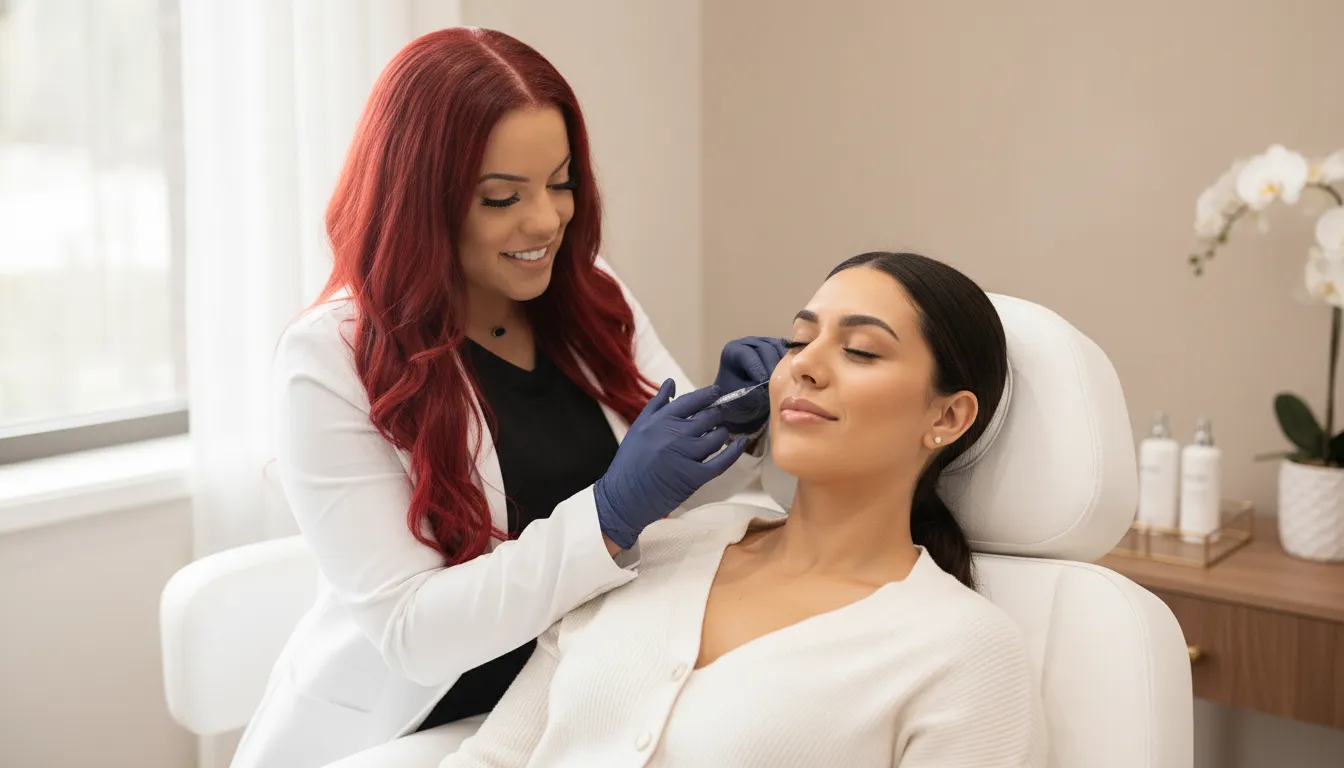
Fine lines can reflect years of expression, but understanding a treatment before choosing it is an important part of thoughtful aesthetic care. Botox is one of the best-known options in the injectable treatments offered at Soul Glow Medspa, where a personalized consultation helps connect your goals with an appropriate plan.
So, what is botox and how does it work? Botox is a purified botulinum toxin type A treatment that temporarily blocks the nerve signals telling targeted muscles to contract. As those muscles relax, the appearance of certain expression lines and wrinkles may soften. Botox is a medical treatment, and candidacy, dosage, placement, and results should be discussed with a qualified provider. Results may vary.
The effect is precise rather than permanent: the goal is to relax selected muscles while preserving a natural-looking ability to express yourself. A closer look at the underlying muscle activity explains why technique and individualized assessment matter, especially when deciding whether Botox fits your concerns.
Talk with the Soul Glow Medspa team about whether Botox may be right for you.
What Is Botox and How Does It Work on Your Muscles?
Botox is a purified, FDA-cleared form of botulinum toxin type A used in carefully selected aesthetic treatments. In simple terms, it temporarily reduces the nerve signals that tell specific facial muscles to contract. As those muscles relax, the appearance of movement-related lines and wrinkles can soften. The effect is targeted, temporary, and dependent on the treatment plan created for you.
Botulinum toxin itself is a potent neurotoxin produced by the bacterium Clostridium botulinum. In aesthetic medicine, it is purified and administered in precisely measured amounts by a qualified medical professional. The goal is not to freeze every expression or change the character of your face. At Soul Glow Medspa, Botox is approached as a form of flagship neuromodulator care, with attention to facial anatomy, muscle movement, proportions, and your desired level of refinement.
How does Botox affect nerve signals?
When a facial muscle contracts, a nerve releases chemical signals that communicate with the muscle and prompt movement. Botox blocks certain chemical signals from those nerves, which temporarily limits contraction in the treated area. The muscle can then relax, reducing the repeated folding of overlying skin that contributes to dynamic lines. This is why Botox is most commonly used for facial muscles associated with frown lines and other facial wrinkles.
Because the treatment works on muscle activity rather than filling a depression in the skin, Botox is different from a dermal filler. A neuromodulator may be appropriate for lines that become more visible with expressions, while other concerns may call for a different treatment or a combination approach. A consultation helps determine which option best fits your anatomy and goals.
What should patients know about the results?
Botox does not permanently change the treated muscle, and it does not guarantee that every line will disappear. The degree of softening depends on factors such as the muscle pattern, the location treated, the amount used, and your individual response. A conservative, personalized plan can help preserve natural-looking expression while addressing the lines that concern you most.
Botox is a medical treatment, so talk with a doctor first about whether it is appropriate for you. This is especially important if you have a neuromuscular condition, are pregnant or breastfeeding, or take medications that could affect treatment. Results may vary. For more details about our Botox treatment, speak with the Soul Glow Medspa team about your goals and candidacy.
How Long Does Botox Last and What Affects Longevity?
For many patients, Botox results typically last about three to four months. The timeline is temporary by design. Botox reduces the nerve signals that tell targeted muscles to contract, and the body gradually metabolizes the neurotoxin. As those signals return, muscle movement becomes more active and expression lines may gradually become visible again.
That does not mean every patient will see the same pattern or schedule. Longevity depends on the treatment plan, the area being treated, and how your body responds. A thoughtful consultation helps set expectations based on your facial movement, goals, and treatment history rather than promising a fixed expiration date.
What can affect how long Botox lasts?
- Dosage: The amount used is selected for the muscle, treatment area, and desired result. A plan focused on subtle movement may differ from one designed to address stronger muscle activity.
- Treatment area: Different facial areas move at different rates and require different approaches. Areas with frequent expression or stronger movement may not follow the same timeline as less active areas.
- Muscle strength: More developed or highly active muscles can influence how quickly movement becomes noticeable again. Your provider evaluates this during the consultation and adjusts the plan accordingly.
- Metabolism: Individual differences in how the body processes Botox can affect duration. A faster or slower response is not necessarily a sign that treatment was performed incorrectly.
- Appointment consistency: Staying aligned with a personalized maintenance plan can help you manage returning movement and preserve a consistent appearance. Your provider can recommend timing based on your response, not a one-size-fits-all calendar.
When should you schedule another treatment?
Many patients begin considering a follow-up when movement and lines start returning, rather than waiting until the previous effect has fully worn off. Your provider can assess the treated area and discuss whether another appointment is appropriate. Follow-up timing should account for your goals, the product used, the treatment area, and your overall health.
Botox is not intended to freeze every expression or guarantee permanent wrinkle correction. Results may vary, and treatment should be provided by a qualified medical professional after an individualized evaluation. If you are pregnant, nursing, have a neuromuscular condition, take certain medications, or have other health concerns, talk to your doctor before treatment.
What Areas Can Botox Treat?
Botox is most commonly used to soften expression lines that form when facial muscles repeatedly contract. Because the treatment temporarily reduces the nerve signals that trigger targeted muscle movement. The result is a smoother, more rested appearance while preserving a natural range of expression when appropriately planned.
Common treatment areas include:
- Forehead lines: Horizontal lines can appear when you raise your eyebrows or express surprise. A provider may treat this area carefully in relation to the muscles around the brows.
- Frown lines between the brows: Also called glabellar lines, these vertical creases can create a persistently tense or serious appearance. Botox can relax the muscles responsible for this movement.
- Crow’s feet: These fine lines form at the outer corners of the eyes, often becoming more visible when you smile or squint. Treatment is placed with precision because the eye area is delicate.
- Brow area: In select cases, a tailored treatment plan may create a subtle brow-lifting effect by balancing muscle activity around the upper face. The goal is refinement, not an exaggerated change.
- Jawline and masseter muscles: Botox may be considered for the masseter muscles at the sides of the jaw when clinically appropriate. This requires an individualized assessment rather than a standard injection pattern.
- Chin dimpling: When muscle activity contributes to a pebbled or dimpled chin, carefully placed treatment may help smooth the appearance of the skin.
Not every area is suitable for every patient, and more treatment is not necessarily better. Facial structure, muscle strength, skin quality, medical history, and your goals all influence the recommended placement and amount. A licensed provider should evaluate your features, discuss realistic expectations, and tailor the plan to your face. You can learn more about Botox treatment at Soul Glow Medspa before scheduling a consultation.
Botox addresses muscle movement, so it may not be the right solution for every type of line or volume concern. Your provider can explain whether another treatment, a combination approach, or no injectable treatment is more appropriate. Results may vary, and you should discuss Botox with a qualified medical professional before treatment.
Ask your provider which Botox plan fits your goals and booking a consultation is the first step.
How Does Botox Compare to Dysport, Xeomin, and Letybo?
Botox, Dysport, Xeomin, and Letybo are all prescription aesthetic products made with botulinum toxin type A. They work through the same broad mechanism: reducing nerve signals that tell selected muscles to contract. The meaningful differences are found in each product’s formulation, how it diffuses through the treatment area, how quickly results may become noticeable, and how a provider calculates dosing.
These products should not be compared by treating their labeled units as interchangeable. A unit of one product does not automatically equal a unit of another. Your provider considers the muscle being treated, its strength and size, your facial anatomy, your goals, and your response to prior treatments before selecting a product and dose.
| Product | Formulation and practical distinction | What patients may notice |
|---|---|---|
| Botox | A purified botulinum toxin type A formulation used to relax targeted muscles. The treatment plan is based on the location and strength of the muscles involved. | Changes develop progressively as the treated muscles relax. The intended result is a softer appearance while preserving an appropriate range of expression. |
| Dysport | A botulinum toxin type A formulation with its own protein composition and dosing system. Its behavior can differ from Botox in how it spreads through a treatment area. | Some patients may notice an earlier onset or a broader pattern of diffusion, but individual response varies. Read our Dysport guide for more context. |
| Xeomin | A botulinum toxin type A formulation with a different purified composition. It uses its own dosing units, which must be interpreted by an experienced provider. | It can provide a targeted muscle-relaxing effect when selected for an appropriate treatment plan. Explore our Xeomin guide to learn more. |
| Letybo | A botulinum toxin type A formulation with distinct manufacturing and formulation characteristics. Its dosing units should not be directly converted to another product without clinical judgment. | Onset, spread, and the final appearance depend on the product, injection technique, dose, and patient anatomy. Results are not identical for every person. |
There is no universally best neurotoxin. A licensed provider at Soul Glow Medspa evaluates your goals and anatomy, then recommends the product that fits your treatment plan. A consultation also gives you an opportunity to discuss onset, expected movement, maintenance, and any medical considerations before treatment. Results may vary, and you should talk with a qualified medical professional about whether a botulinum toxin treatment is appropriate for you.
What Should You Expect at Your First Botox Appointment?
Your first appointment should feel like a conversation, not a rushed transaction. At Soul Glow Medspa, licensed providers take time to understand your goals, answer questions, and recommend an approach that fits your features and preferences. You can also review the broader injectable treatments available through the practice as you consider your options.
- Discuss your goals and medical history. Your provider will ask what you would like to improve, whether you are hoping to soften a specific expression line or create a more refreshed appearance. They will also review relevant medical history, medications, allergies, previous injectable treatments, and other factors that may affect your care. This is the right time to share your concerns openly, including any worries about discomfort or an overly frozen result.
- Review the treatment areas and personalized plan. Your provider will assess your facial movement, proportions, and the areas you would like to address. Together, you can discuss the proposed injection sites, the intended effect, and whether Botox is appropriate for your goals. The plan may focus on one area or several areas, depending on your anatomy and preferences. If treatment is recommended, your provider should explain what to expect and give you an opportunity to make an informed decision before proceeding. You can learn more about the practice’s approach on the Botox treatment service page.
- Receive the injections. The injection portion is generally brief. Most patients describe the sensation as a series of small pinches or brief stings, although comfort can vary. Your provider will use a precise technique based on your personalized plan. Botox does not require surgical incisions, and patients typically return to their normal schedule without planned downtime. Your provider will still explain any immediate precautions that apply to your treatment.
- Leave with clear aftercare guidance. Before you leave, your provider will review how to care for the treated areas and what activities or products to avoid for the recommended period. Ask when to expect the effect to develop, when follow-up may be appropriate, and which symptoms should prompt a call to the office. Following the guidance helps support a smooth experience and gives you a clear point of contact if questions arise after your visit.
A thoughtful consultation is an important part of safe, personalized injectable care. Results may vary, and Botox may not be appropriate for every patient. Discuss your medical history and candidacy with a qualified provider before treatment.
Book your Botox consultation at Soul Glow Medspa and our providers will help you build a personalized plan.
Frequently Asked Questions
What is Botox and how does it work?
Botox is an injectable treatment made with a purified form of botulinum toxin. It temporarily blocks selected chemical signals from nerves to muscles, reducing muscle contraction in the treated area. This can soften expression-related lines while preserving a natural range of movement when the treatment is carefully planned. Mayo Clinic explains the mechanism in more detail.
How long do Botox results typically last?
Results typically last about three to four months, although the timeline varies by the treatment area, dose, muscle activity, metabolism, and individual response. Your provider can help you understand when maintenance may be appropriate based on how your results develop, rather than scheduling repeat injections too early.
Is Botox safe when performed by a qualified provider?
Botox can be an appropriate option for many adults when it is prescribed and administered by a qualified medical professional who evaluates your health history, goals, and anatomy. During a consultation, discuss medications, allergies, pregnancy or breastfeeding, neuromuscular conditions, and previous injectable treatments. Follow the provider’s instructions, and talk with your doctor before treatment if you have medical concerns. Results may vary.
What side effects can happen after Botox?
Temporary redness, swelling, tenderness, bruising, or a mild headache can occur after injections. These effects generally improve as the area settles, but your provider should explain what is expected and when to call. Seek prompt medical guidance for unusual or worsening symptoms, including trouble swallowing, speaking, breathing, or significant weakness. Clear aftercare instructions and follow-up support are important parts of a safe treatment experience.
Ready to Explore Botox for Your Goals?
A personalized consultation can help you understand whether Botox fits your features, preferences, and treatment goals. At Soul Glow Medspa, the next step is a thoughtful conversation about your concerns and the approach that may suit you. Results may vary, and a qualified provider can help you make an informed decision. Schedule your personalized Botox consultation with the Soul Glow Medspa team.
